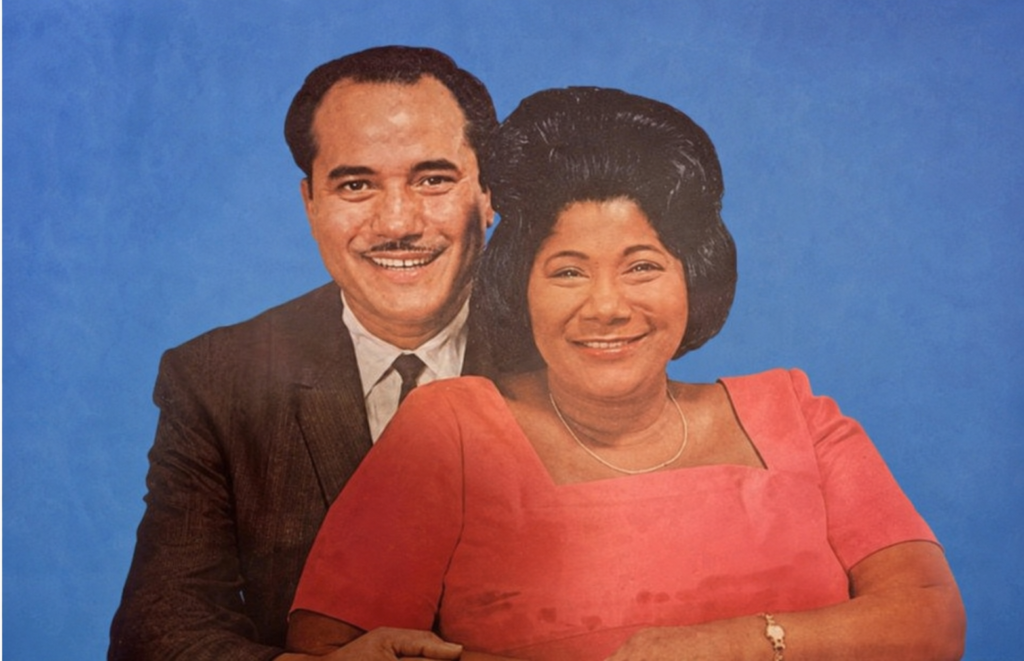
When discussing legendary gospel singer Mahalia Jackson, most conversations focus on her extraordinary voice, groundbreaking career, and lasting influence on American music. She is remembered worldwide as the “Queen of Gospel,” a title earned through decades of faith-driven performances and unmatched vocal power. Yet behind every iconic public figure are personal relationships that shape their journey, and one of the least discussed chapters of Mahalia Jackson’s life involves her first husband, Isaac Hockenhull.
Though Isaac Hockenhull never sought public fame, his name continues to attract attention because of his connection to Mahalia Jackson during the earliest years of her rise. He was not a musician, performer, or public celebrity, but his marriage to Jackson placed him close to one of the most important artists in American history during a defining period of her life. Their relationship reveals an intimate story of ambition, faith, financial struggle, and emotional conflict—one that helps us better understand Mahalia Jackson’s personal journey and the sacrifices that often accompany greatness.
This article explores the life of Isaac Hockenhull in full detail, from his early years and professional background to his marriage, divorce, and lasting place in historical memory. Although records about him remain limited, the details that do exist paint a fascinating portrait of a man whose life briefly intersected with greatness.
Contents
- 1 Who Was Isaac Hockenhull?
- 2 Isaac Hockenhull’s Early Life and Education
- 3 Moving to Chicago During a Time of Change
- 4 How Isaac Hockenhull Met Mahalia Jackson
- 5 Marriage and Shared Dreams
- 6 Conflict Over Mahalia Jackson’s Music Career
- 7 Financial Struggles and Personal Challenges
- 8 Why Isaac Hockenhull and Mahalia Jackson Divorced
- 9 Isaac Hockenhull’s Life After Divorce
- 10 Isaac Hockenhull’s Historical Importance
- 11 Isaac Hockenhull and Mahalia Jackson’s Legacy
- 12 Conclusion
Who Was Isaac Hockenhull?
Isaac Hockenhull was an African American professional and businessman who became best known as the first husband of Mahalia Jackson. Unlike his famous former wife, Isaac largely lived outside the public eye, and much of his personal history has been preserved only through biographies and historical references connected to Jackson’s life story.
Historical records suggest Isaac Hockenhull was born in the early twentieth century in the United States, likely in the American South during a period marked by racial segregation and limited opportunities for Black Americans. Growing up during this era would have meant navigating serious social and economic obstacles. Yet despite these challenges, Isaac pursued education and built a respectable professional life, reflecting intelligence, ambition, and determination.
While he never became a household name, his marriage to Mahalia Jackson placed him in a unique historical position. Today, his name remains tied to hers—not because of celebrity, but because he was part of a crucial chapter in the life of one of America’s most beloved gospel icons.
Isaac Hockenhull’s Early Life and Education
Very little verified information survives about Isaac Hockenhull’s childhood, which is common for many African Americans born in the early 1900s due to incomplete records and limited documentation. However, available historical references indicate that he was educated and professionally trained as a chemist, a highly notable achievement for a Black man during that period.
At the time, access to advanced education for African Americans was severely restricted by segregation and systemic racism. For Isaac to enter a scientific field suggests not only academic ability but also significant perseverance. Chemistry was considered a highly respected profession, and entering that field required discipline, intelligence, and determination.
His educational success reveals an important side of his personality. Isaac was not simply a man remembered because of his marriage; he was someone who had personal aspirations and professional goals of his own. This distinction matters because it shows he entered his relationship with Mahalia Jackson as an accomplished individual, not merely as a supporting figure in someone else’s story.
Moving to Chicago During a Time of Change
Like many African Americans during the Great Migration, Isaac Hockenhull eventually moved to Chicago, a city that became a central destination for Black families seeking better economic opportunities and greater freedom from Southern racial oppression.
During the 1920s and 1930s, Chicago was one of the most important centers of Black cultural growth in America. It was home to thriving churches, businesses, newspapers, and musical communities. Gospel music flourished there, and neighborhoods on the South Side became hubs of Black religious and artistic life.
For Isaac, Chicago represented opportunity. It offered employment, community, and access to an expanding middle class. It also became the place where he would meet Mahalia Jackson, a young woman whose life—and ultimately American music—would soon change forever.
How Isaac Hockenhull Met Mahalia Jackson
Isaac Hockenhull met Mahalia Jackson in Chicago during the mid-1930s, when she was still far from the fame that would later define her career. At the time, Mahalia was working hard to support herself, singing in churches while taking on odd jobs and building her identity as a gospel artist.
Their meeting came during an important stage in both of their lives. Isaac was seen as educated, ambitious, and respectable—qualities that likely appealed to Jackson, who admired stability and hard work. He reportedly impressed her with his intelligence and personal confidence.
Their relationship developed naturally, and they married in 1936. For Mahalia, this was a hopeful new beginning. She believed marriage would provide emotional support and companionship as she continued pursuing her calling in gospel music.
At the beginning of their marriage, Isaac and Mahalia appeared to share many values. Both were hardworking and committed to building a better life. They lived modestly in Chicago and tried to establish a secure household during one of the most difficult economic periods in American history.
Like many young couples of the era, they faced everyday financial stress. The Great Depression affected nearly every family in America, and even educated professionals struggled. Mahalia contributed by working various jobs while continuing to sing, and Isaac maintained employment to support the household.
At first, their partnership seemed promising. But as Mahalia’s talent and ambition grew, deeper differences began to emerge—differences that would ultimately change the course of their marriage.
Conflict Over Mahalia Jackson’s Music Career
One of the most significant tensions in the marriage involved Mahalia Jackson’s music career. Isaac reportedly believed her extraordinary voice had commercial potential far beyond church walls. He encouraged her to pursue formal training and broaden her career into secular music.
From a practical perspective, his advice made sense. At the time, secular music offered greater financial rewards, larger audiences, and more opportunities for fame. Isaac likely believed he was helping his wife pursue success.
But Mahalia strongly disagreed. She viewed gospel music not as entertainment, but as a divine calling. Singing in church was an act of worship and spiritual responsibility. She refused to compromise her religious values for money or mainstream recognition. This disagreement became more than a career conflict—it became a clash of personal identity and spiritual belief.
Financial Struggles and Personal Challenges
Beyond their differences over music, money became another source of tension. Like countless couples during the late 1930s, Isaac and Mahalia lived under significant financial pressure.
Biographical accounts suggest Isaac developed a gambling habit, particularly involving horse racing. Reports indicate that money was sometimes lost through betting, creating instability in the household. For Mahalia, who worked tirelessly to earn and save money, this was deeply frustrating and emotionally painful.
Financial hardship often intensifies existing marital problems, and that appears to have happened in their case. Trust began to weaken, communication became more difficult, and emotional distance grew. Their marriage increasingly became a source of stress rather than support.
Why Isaac Hockenhull and Mahalia Jackson Divorced
By 1941, their marriage had reached its breaking point. After approximately five years together, Isaac Hockenhull and Mahalia Jackson divorced.
The separation was not caused by a single event but by a combination of unresolved issues. Their opposing views on music, financial difficulties, and personal incompatibility all contributed to the breakdown.
For Mahalia, the divorce was emotionally difficult but ultimately transformative. It allowed her to fully dedicate herself to gospel music without compromise. Soon afterward, her career began accelerating rapidly, eventually making her one of the most influential singers in American history.
Isaac Hockenhull’s Life After Divorce
After his divorce from Mahalia Jackson, Isaac Hockenhull largely disappeared from public life. Unlike many individuals connected to famous figures, he did not publicly discuss their marriage or seek media attention.
Most accounts suggest he remained in Illinois and continued living privately. Little is known about his later career, relationships, or final years. He appears to have deliberately chosen a life away from public scrutiny.
That silence has contributed to the mystery surrounding him. Without interviews, memoirs, or public records explaining his later life, much of Isaac’s story remains incomplete—making him a quiet but intriguing figure in historical memory.
Isaac Hockenhull’s Historical Importance
Some may wonder why Isaac Hockenhull still matters today. The answer lies not in celebrity, but in context. He was present during one of the most formative periods of Mahalia Jackson’s life, before fame transformed her into a global icon.
Understanding people like Isaac helps historians tell fuller, more human stories. Great public figures do not emerge in isolation; they are shaped by relationships, conflicts, and emotional experiences. Isaac was part of that environment for Mahalia Jackson.
His story also reflects broader themes in American history—Black education, economic hardship during the Depression, migration to urban centers, and the tension between personal ambition and spiritual conviction.
Isaac Hockenhull and Mahalia Jackson’s Legacy
Today, Mahalia Jackson remains one of the most celebrated voices in gospel history. Her performances inspired millions, influenced the civil rights movement, and permanently changed American music.
Isaac Hockenhull belongs to the earlier chapter of that story—the chapter before the awards, before the global tours, and before the title “Queen of Gospel.” He represents a private part of Mahalia’s life that shaped her emotionally before she became a public legend.
That connection ensures his name continues to be remembered, even if his own life remained largely out of view.
Conclusion
Isaac Hockenhull may never have intended to become part of American cultural history, but through his marriage to Mahalia Jackson, he became linked to one of the most important musical figures of the twentieth century. His story is not one of fame or public acclaim, but of quiet significance.
He was an educated, ambitious man who lived during a challenging period in American history and shared several formative years with a woman who would later inspire the world. Their marriage was marked by hope, struggle, disagreement, and ultimately separation—but it played an undeniable role in shaping Mahalia Jackson’s personal journey.
Today, Isaac Hockenhull remains an important reminder that history is often shaped not only by the famous names we celebrate, but also by the quieter lives connected to them. Through that lens, his story deserves to be remembered.