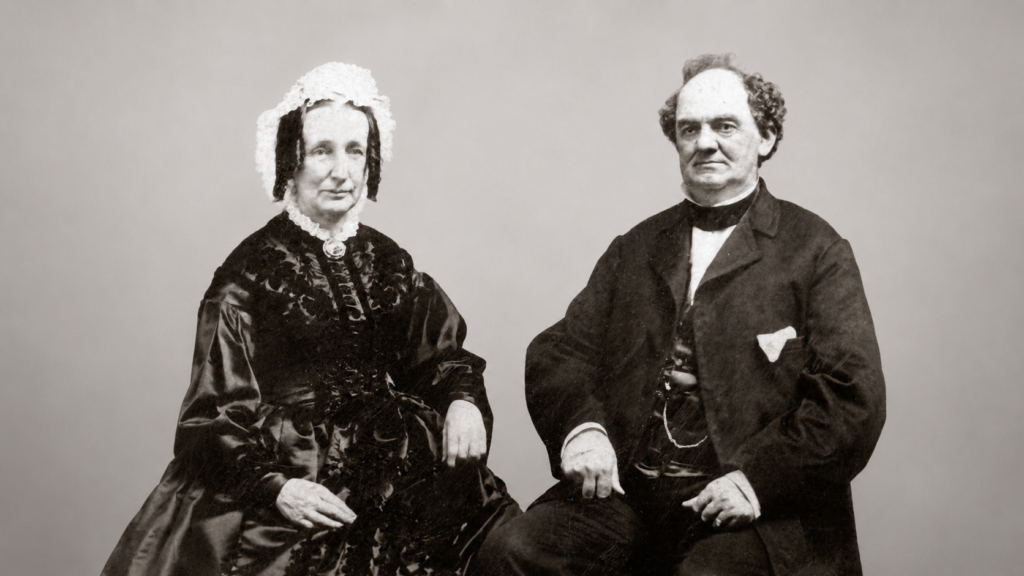
Charity Hallett is a name many people discover while reading about P. T. Barnum, the famous American showman whose life inspired books, documentaries, and the musical film The Greatest Showman. Yet Charity Hallett was not a performer, a public speaker, or a celebrity in the modern sense. She was a private nineteenth-century woman whose life became connected to one of the most dramatic public careers in American entertainment history. Her story is quieter than Barnum’s, but it is still important because it shows the human side behind a famous name.
Born in Connecticut in 1808, Charity Hallett became the first wife of Phineas Taylor Barnum, better known as P. T. Barnum. Their marriage lasted for more than four decades and began long before Barnum became widely known as a showman, museum owner, promoter, businessman, politician, and circus figure. While Barnum built a world around publicity and spectacle, Charity’s life was mostly centered on family, marriage, motherhood, and the private responsibilities expected of women in her time. Understanding Charity Hallett means looking beyond fame and exploring the woman who stood beside Barnum during the most important years of his rise.
Contents
- 1 Who Was Charity Hallett?
- 2 Early Life in Bethel, Connecticut
- 3 Marriage to P. T. Barnum
- 4 Life Before Barnum Became Famous
- 5 Charity Hallett as a Wife and Mother
- 6 Her Private Life Beside a Public Man
- 7 Charity Hallett and The Greatest Showman
- 8 The Challenges of Being P. T. Barnum’s Wife
- 9 Death and Later Legacy
- 10 Why Charity Hallett Still Matters Today
- 11 Conclusion
Who Was Charity Hallett?
Charity Hallett, later known as Charity Barnum after marriage, was the first wife of P. T. Barnum. She is best remembered today because of her connection to Barnum, but she was also a real woman with her own background, family life, and place in nineteenth-century Connecticut history. Unlike Barnum, she did not leave behind a major public record, so most of what is known about her comes from biographical references, family records, cemetery information, and accounts of Barnum’s life.
She was born in 1808 in Bethel, Connecticut, the same small New England community where Barnum also spent his early years. This shared local background is important because their relationship began before fame, wealth, or national attention entered Barnum’s life. Charity did not marry a polished celebrity. She married a young man who was ambitious, restless, and still searching for his future. That simple fact gives her story more depth than the romanticized versions sometimes shown in popular culture.
Early Life in Bethel, Connecticut
Charity Hallett’s early life was shaped by the world of early nineteenth-century New England. Bethel, Connecticut, was a small town where families often lived modestly, worked hard, and relied on community connections. Women of Charity’s generation were usually expected to contribute to household life, develop practical skills, and prepare for marriage and motherhood. Historical references describe Charity as having worked as a tailoress before her marriage, which suggests she was familiar with ordinary labor and domestic responsibility.
This detail also helps separate the real Charity Hallett from the polished image sometimes attached to her through films or modern retellings. She was not born into public luxury or theatrical glamour. Her early life likely involved the routines of a working community, local relationships, church life, family expectations, and the limited opportunities available to women at the time. In that sense, Charity’s background was very different from the world Barnum later created around museums, promotion, crowds, curiosity, and entertainment.
Marriage to P. T. Barnum
Charity Hallett married P. T. Barnum on November 8, 1829. At the time, Barnum was only nineteen years old, while Charity was about twenty-one. Their marriage began when Barnum was still far from the international fame he later achieved. This is one of the most important facts in the Charity Hallett biography, because it shows that she was part of Barnum’s life before his name became linked with American show business.
Their marriage lasted for about forty-four years, ending only with Charity’s death in 1873. During those decades, Barnum’s life changed dramatically. He moved into business, publishing, entertainment, museum ownership, public promotion, politics, and eventually the world of the circus. Charity lived through those changes as his wife, even though she remained largely outside the spotlight. Her long marriage to Barnum places her at the center of his private life, even if she was not publicly visible in the same way he was.
Life Before Barnum Became Famous
When Charity Hallett married Barnum, he was not yet the famous showman remembered today. He had been raised in Connecticut and had worked in different small business ventures before moving more deeply into public entertainment. His early adult years included risk, trial, and reinvention. Charity entered marriage at a time when Barnum’s future was uncertain, which makes her role different from that of someone who married into established fame.
Barnum eventually moved to New York City and became involved in ventures that introduced him to the world of entertainment and promotion. His purchase and development of the American Museum helped turn him into a national figure. Through these years, Charity was part of the household behind his public career. While Barnum attracted attention from newspapers, audiences, critics, and supporters, Charity’s role was more private, tied to home, family, children, and the emotional weight of being married to a man whose ambitions rarely stayed still.
Charity Hallett as a Wife and Mother
Charity Hallett and P. T. Barnum had four daughters: Caroline Cornelia, Helen Maria, Frances Irena, and Pauline Taylor. Their family life included both joy and sorrow. Frances Irena died young, a painful loss that reflected the harsh reality of childhood mortality in the nineteenth century. For Charity, motherhood was likely one of the most important parts of her identity, especially in a period when women’s lives were strongly connected to childrearing and home management.
Barnum’s public life often required travel, business risks, and constant attention to new projects. This would have placed significant pressure on family life. Charity’s responsibilities were not performed on a stage, but they were still demanding. She helped hold together the private side of a family attached to a man whose career was public, unpredictable, and often controversial. When people search for P. T. Barnum first wife or Charity Barnum life story, they are usually looking for this human side of the Barnum household.
Her Private Life Beside a Public Man
One of the most interesting parts of Charity Hallett’s story is the contrast between her privacy and Barnum’s publicity. P. T. Barnum became famous for understanding attention. He knew how to attract crowds, create curiosity, promote exhibitions, sell tickets, and keep his name in public conversation. Charity, by contrast, did not build a public image. She was not known as a performer, business partner, or promotional figure.
This difference makes her life harder to document, but it also makes it meaningful. Many women connected to famous nineteenth-century men are remembered only through their husbands’ records. Charity’s story shows how private women could be close to major historical events without being fully recorded by history. She lived beside one of America’s most famous promoters, yet her own voice is mostly absent from the public record. That absence should not be treated as emptiness. It reflects the time in which she lived and the limited space given to women’s personal stories.
Charity Hallett and The Greatest Showman
Modern interest in Charity Hallett grew after the release of The Greatest Showman, the popular musical film inspired by P. T. Barnum’s life. In the movie, Barnum’s wife is presented as a loving, loyal figure who supports him through ambition, success, emotional distance, and public pressure. While the film introduced many viewers to the Barnum family, it is important to remember that it is not a strict historical biography.
The real Charity Hallett’s life was more complex and less theatrical than the movie version. The film simplifies timelines, softens some historical controversies, and reshapes real people for emotional storytelling. Charity’s real life was not a musical romance built around dramatic scenes and polished songs. She was a woman of the 1800s who lived through marriage, motherhood, social expectations, family loss, and the demands of being connected to a famous man. Readers searching for Charity Hallett real story should understand that the film is entertainment, while history gives us a quieter and more careful portrait.
The Challenges of Being P. T. Barnum’s Wife
Being married to P. T. Barnum likely came with unusual challenges. Barnum was ambitious, energetic, and often drawn toward risk. His business life included success, failure, debt, rebuilding, and constant public attention. He was also a controversial figure because some of his exhibitions and promotional methods are viewed critically today. Charity lived close to this complicated world, even if she was not publicly responsible for it.
Her marriage existed during a time when wives were expected to support their husbands, manage domestic life, and preserve family respectability. Charity’s life would have required patience and endurance, especially as Barnum’s work pulled him into travel, publicity, business conflict, and public debate. While we should not invent private emotions that records do not prove, it is fair to say that her life was shaped by the instability and intensity of Barnum’s career. Her story reminds readers that fame affects not only the famous person, but also the family living behind the curtain.
Death and Later Legacy
Charity Hallett Barnum died on November 19, 1873. Her death marked the end of a marriage that had lasted more than forty years. After her death, Barnum later married Nancy Fish, a much younger woman from England. This second marriage sometimes attracts attention because of the age difference, but it should not overshadow the long history Barnum shared with Charity. Charity was his first wife, the mother of his children, and the woman connected to the largest part of his adult life.
Her legacy is quiet but lasting. She is remembered in family records, biographical notes, cemetery records, and discussions of Barnum’s personal life. She also remains a subject of interest for readers who want to know the real people behind famous stories. Charity Hallett was not a public entertainer, but her life gives depth to the Barnum story. Without her, the private side of Barnum’s world would be incomplete.
Why Charity Hallett Still Matters Today
Charity Hallett matters because she represents the many women in history whose lives were closely connected to famous men but whose own stories were not fully preserved. She lived during a period when women were often remembered as wives and mothers rather than as individuals with their own experiences. Today, writing about Charity Hallett allows us to look more honestly at the personal side of history.
Her story also helps readers understand P. T. Barnum in a fuller way. Barnum was not only a showman, businessman, and promoter. He was also a husband and father whose ambitions affected a real family. Charity’s life adds emotional context to his public legacy. When people search for Charity Hallett, Charity Barnum, P. T. Barnum wife, or The Greatest Showman real wife, they are often looking for the truth behind a familiar legend. The truth is quieter than fiction, but it is also more human.
Conclusion
Charity Hallett’s life was not lived in the spotlight, yet it remains closely tied to one of the most famous names in American entertainment history. Born in Bethel, Connecticut, in 1808, she married P. T. Barnum in 1829 and remained his wife for more than four decades. She became the mother of his four daughters and lived through the years when Barnum rose from a young, uncertain businessman into a nationally recognized showman.
The most respectful way to remember Charity Hallett is to see her as more than a background figure. She was not just “P. T. Barnum’s wife” or a character connected to The Greatest Showman. She was a private woman whose life reflected marriage, motherhood, work, endurance, and the quiet realities of nineteenth-century family life. Her story may not be filled with public drama, but it adds balance and humanity to the larger Barnum legacy. In the end, Charity Hallett remains important because she reminds us that behind every famous public life, there are private lives that deserve to be remembered with care.